

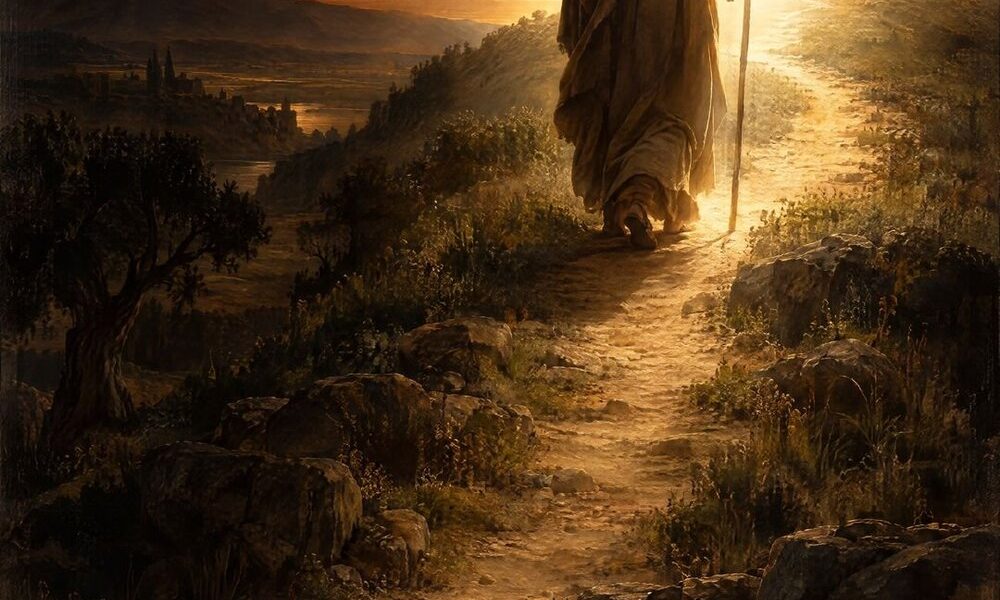
“The highest and most beautiful things…are to be lived.” As we try to put the last couple of days behind us, this is a good reminder of what is really important. The people that we live with. Go do life with them, laugh, spend your time, and above all else, live. Live by being present. It reminds me of an X post I bookmarked, but I wasn’t sure how to work it into the quotes below. So, here looks like a good spot. The hook at the beginning gets you. “There’s a man in Genesis who never died. And the Bible gives him one sentence…”Enoch walked with God, and he was not, for God took him.” – Genesis 5:24″ The post goes on to explain why Enoch was so special: “He walked with God.” And here is the important part: “Enoch wasn’t a hermit on a mountain. He was a father. He raised kids, worked, ate, slept. He walked with God in the middle of an ordinary, busy, family life.” … Just like you and I. The post continues to explain what this means: “It’s not a feeling. It’s not a single dramatic moment. It’s a direction. Every day, going the same way He’s going.” The cool thing, we can do this too, and it starts with the people around you. Perhaps the last couple of days are a good reminder that what really matters are the people in your immediate circle. Do life with them, laugh with them, talk to them…walk with them, and as we are on that journey, we can also “set our sights on the realities of heaven” and walk with God.
Read the whole thing, it is quite good.
There’s a man in Genesis who never died. And the Bible gives him one sentence.
Genesis 5 is the chapter most people skip. A list of names. Ages. Sons and daughters. And over and over, like a funeral bell, the same three words:
“…and he died.”
Adam lived 930 years, and he died. Seth, and he died. Enosh, and he died. Eight times the bell rings.
And then, in the middle of the list, it doesn’t:
“Enoch walked with God, and he was not, for God took him.” – Genesis 5:24
No death. No burial. No explanation. He was just… gone.
The book of Hebrews confirms what it means: “By faith Enoch was taken up so that he should not see death, and he was not found, because God had taken him” (Hebrews 11:5).
One man in the whole ancient world skipped the grave. Only one other in all of Scripture shares that: Elijah, carried up in the whirlwind.
So what was so special about Enoch?
The Bible tells us exactly one thing about his life. Twice. He walked with God.
That’s it. No miracles. No kingdom. No great battles. Just a walk.
And the details are surprising.
It started late. Verse 22 says Enoch walked with God after he became the father of Methuselah, when he was 65. Something changed when that child was born. Whatever his life was before, it turned there.
It was ordinary. He walked with God for 300 years, and the same verse says he “had other sons and daughters.” Enoch wasn’t a hermit on a mountain. He was a father. He raised kids, worked, ate, slept. He walked with God in the middle of an ordinary, busy, family life.
It was constant. The Hebrew verb is a special form, hithallek, meaning to walk about, to go to and fro, a continuous, ongoing walk. It’s the same form used in Genesis 3:8 of God Himself walking in the garden in the cool of the day. Enoch got back what Adam lost: walking with God, side by side.
So what does walking with God actually mean?
It’s not a feeling. It’s not a single dramatic moment. It’s a direction. Every day, going the same way He’s going.
The prophet Amos asks: “Do two walk together, unless they have agreed to meet?” (Amos 3:3). Walking with God means agreement. His way becomes your way. His pace becomes your pace. You stop running ahead and stop dragging behind.
And Hebrews tells us what made it possible: “Before he was taken he was commended as having pleased God. And without faith it is impossible to please him” (Hebrews 11:5–6). Not perfection. Faith. Trusting the One walking beside you.
There’s an old saying about this verse. Enoch and God walked together every day, and they talked, and they walked a little further each time. And one day they walked so far that God said, “Enoch, we’re closer to my house than yours. Why don’t you come home with me?”
That’s the end of every true walk with God.
For Enoch, it came without death. For us, Jesus has gone through death first so that it can never be the end of the road. “I will come again and will take you to myself, that where I am you may be also” (John 14:3).
He took Enoch.
He will take you too.
Just keep walking.
— Adam | Faithful Messenger (@Adam_FaithfulM) November 3, 2026
Lunch Box Quotes are notes I usually include in the kids’ lunches. Since Number 1 is off in college and Number 2 is skipping lunch now (he’s trying to cut weight for lacrosse), they both get a text. Number 3 and Number 4 get handwritten notes on napkins.
Visual credit to – Featured Image: Photo Credit: @Adam_FaithfulM
Quotes: @WordsnWisdom26 @DearS_o_n @DylanoA4 @BeSaintly @Mythos_Man
Quotes:
1. “A man is respected for what he achieves, not for what he promises.” – Napoleon Bonaparte
2. “Your current situation is not your final destination.” – Dear Son
3. “That men do not learn very much from the lessons of history is the most important of all the lessons of history.” – Aldous Huxley
4. “Turn my eyes away from worthless things.” – Psalm 119:37
Bonus Quote: “The highest and most beautiful things in life are not to be heard about, nor read about, nor seen but, if one will, are to be lived.” – Søren Kierkegaard
Sources:
“A man is respected for what he achieves, not for what he promises”
~ Napoleon Bonaparte https://t.co/cwGdqDHQuu
— Words & Wisdom (@WordsnWisdom26) October 30, 2026
Dear son, https://t.co/qMRfzGRfWL
— Dear Son. (@DearS_o_n) November 1, 2026
Aldous Huxley, timeless banger https://t.co/gNsX8FyMec
— Dylan O’Sullivan (@DylanoA4) November 4, 2026
_ https://t.co/0CAEzcGzCG
— Become A Saint (@BeSaintly) November 3, 2026
“The highest and most beautiful things in life are not to be heard about, nor read about, nor seen but, if one will, are to be lived.”
— Søren Kierkegaard
— Man of Myth (@Mythos_Man) November 1, 2026