

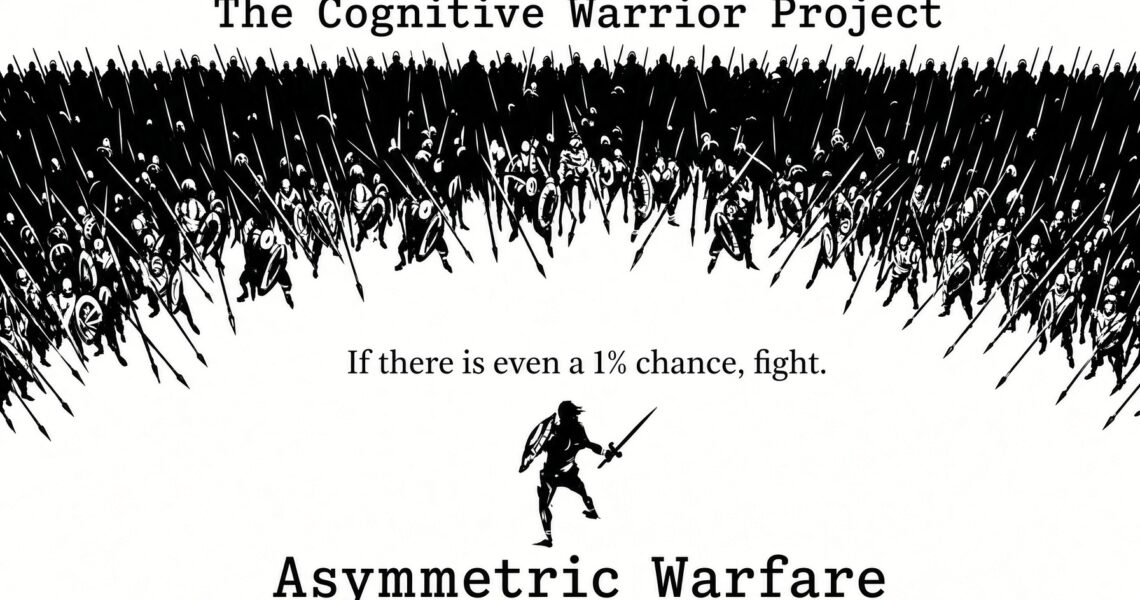
Twice a week, I get to drive Number 3 and two other girls from the neighborhood to school, and on this last trip we listened to the latest episode of the President’s Daily Brief (her idea) and talked about Asymmetric Warfare. Really, she was trying to prepare for a debate in her Holocaust and Genocide Studies class, and we just ended on asymmetric war. I am sure the girls in the back were riveted and hanging on every word…
One of the issues I had was tryin to explain what Asymmetric War was and get her to truely understand what the means. I don’t think she is alone in that so I thought the four topics discussed in the podcast were good examples of opposing forces that, on paper, are fighting from a place of disadvantage and therefore trying to exploit a weakness rather than engage in direct conflict. I encourage you to listen to the podcast for more context. And if you disagree with my assessment, let me know in the comments below! Now let’s dive in.
From the show description:
- Ukraine’s drone campaign against Russia’s oil industry is inflicting serious economic damage. A new Washington Post investigation reveals how Ukrainian forces are systematically disabling critical refinery equipment, even as President Trump pressures Kyiv to halt the attacks.
- Britain formally links Iran’s Revolutionary Guards to a suspected plot targeting RAF Fairford, a British air base that housed American B-1 bombers. London is imposing new sanctions on Iranian-linked operatives amid growing concerns about Tehran’s covert operations on NATO territory.
- Western intelligence agencies warn that Russia is intensifying efforts to assassinate European defense industry executives involved in producing weapons for Ukraine. The alleged campaign is prompting heightened security measures and raising concerns about Moscow’s covert operations across Europe.
- In today’s Back of the Brief, Colombia’s decades-old guerrilla conflict intensifies as rebels detonate a car bomb in the country’s southwest. The bombing comes amid escalating clashes between insurgents and government forces.
To better illustrate how or why each of these is an example of asymmetric war, I think this would be a good place to define it, and since I cannot write it any better, I used AI to help:
Asymmetric Warfare is a conflict between opposing forces whose military power, strategies, or material resources differ significantly. Instead of engaging in direct, conventional head-to-head battles, the weaker or less-resourced side uses unconventional methods to exploit the stronger adversary’s vulnerabilities.
Key Characteristics
• Power Disparity: One side (often a state or superpower) possesses superior conventional military might, technology, and funding, while the other side (often an insurgent group, militia, or non-state actor) has far fewer resources.
• Unconventional Tactics: The weaker side avoids open-field battles and relies instead on guerrilla warfare, ambushes, sabotage, urban combat, and terrorism.
• Psychological and Political Goals: Rather than trying to conquer large tracts of land outright, weaker forces aim to prolong the conflict, inflict steady casualties, and erode the enemy’s political will and public support at home.
• Blurred Lines: These conflicts often take place within civilian populations, making it difficult to distinguish between non-combatants and combatants, and muddying traditional rules of engagement.
Common Examples of Tactics
• Guerrilla Operations: Hit-and-run raids, snipers, and local ambushes by mobile units.
• Improvised Explosive Devices (IEDs) & Low-Cost Munitions: Using low-cost, locally made bombs or inexpensive drones to challenge high-tech, multi-million-dollar defense systems.
• Proxy Networks: State actors backing regional militias or rebel groups to fight adversaries indirectly.
• Cyber and Information Warfare: Disrupting digital infrastructure, communication networks, or public narratives to create strategic pressure.
You can read more detailed breakdowns of these dynamics on Merriam-Webster’s Dictionary Definition or via the Encyclopedia Britannica Guide.
If you would like, I can give you historical examples (such as the Vietnam War or the war in Afghanistan) or explain how modern militaries adapt to fight asymmetric threats.
Need more examples? Check out these headlines!
North Korea vs. the US
Over 40 laptop farms across Texas were dismantled by the FBI last month, with nearly 200 computer devices seized. The network helped North Koreans obtain remote IT jobs at U.S. companies using stolen American identities, funding Pyongyang’s nuclear and ballistic missile programs.
Indictments were unsealed in Ohio against two U.S. nationals and 10 China-based North Koreans. Prosecutors say the scheme hit 70 companies for more than $3 million between 2019 and 2025.
New York Times
— Open Source Intel (@Osint613) October 13, 2026
Iran vs. the US
Ya Think ????!!!!
They can’t win a symmetric battle…so they went asymmetric.
Shocking, I know.
— Eric Schwalm (@Schwalm5132) October 9, 2026
Iran vs. the US using an unwitting (?) press.
BREAKING: Iranian operatives used OpenAI models and fake personas to help plant news articles critical of the US war against Iran in multiple US media outlets, OpenAI has said.
— unusual_whales (@unusual_whales) October 8, 2026
In each of the examples above, an opposing force that is considerably weaker is attempting to exploit vulnerabilities of their adversary. Whether it is Iran trying to influence US media or inflict a subversive attack away from the battlefield or Russia attempting to intimidate the private sector in Europe, each example provides insight into an often used but less understood military term. One could argue that the Russia – Europe example above is not Asymmetric Warfare but more conflict in the Grey Zone of war but I disagree. In my opinion, the European advantage in technology and agility in warfare as demonstrated by the Ukrainian drone campaign, is so great that it creates asymmetry in capabilities. Russia cannot iterate fast enough so they are doing whatever they can to slow Europe down.
So what do you think? Are these good example that help you better understand asymmetric warfare?